
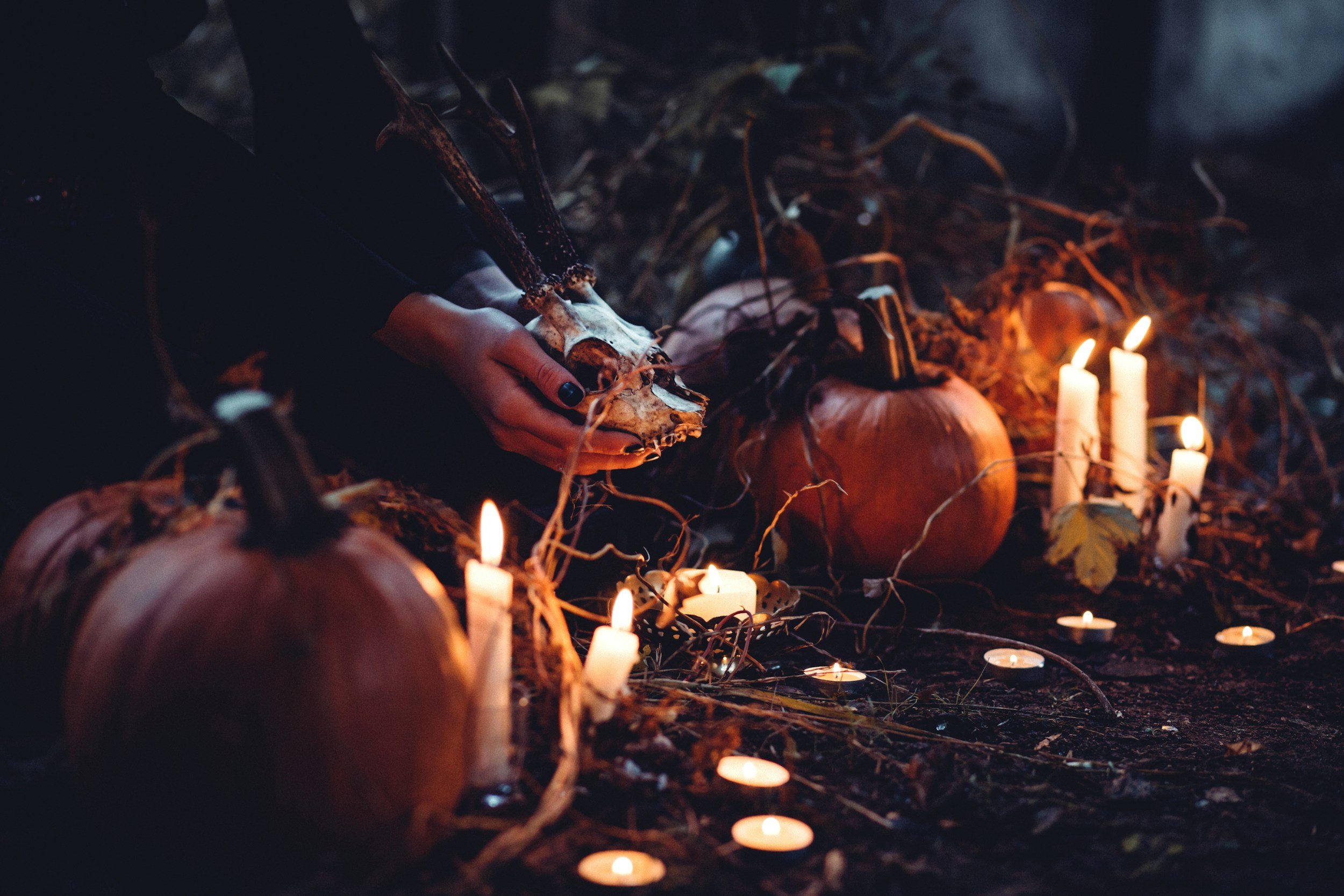
Beyond the costumes and candy lies a fascinating history of ancient traditions, folklore, and the mysteries of the changing seasons.
The Ancient Roots and Mystical Meaning Behind October 31
Have you ever wondered why we celebrate Halloween? Why do we dress in costumes, carve glowing faces into pumpkins, hand out candy, and fill our homes with ghosts, witches, and all things spooky?
The other day, my husband and I were talking about Halloween when he mentioned that he'd always associated the holiday with Mexico's Day of the Dead rather than Celtic folklore. To him, Ireland brought to mind leprechauns, while Mexico was the place associated with honoring the dead.
Our conversation sparked my curiosity. How many of us celebrate Halloween without really knowing where its traditions began?
Behind the playful scares and sweet treats lies a fascinating history woven from ancient seasonal celebrations, Celtic folklore, religious observances, and centuries of storytelling.
Among them are Samhain (pronounced SOW-in), a Gaelic festival marking the transition from the harvest season into winter, and All Hallows' Eve, the evening before the Christian observance of All Saints' Day, from which the name Halloween eventually emerged.
So how did these ancient traditions become intertwined, and how did they evolve into the Halloween we know today?
Let's wander back through the centuries and uncover the stories behind one of autumn's most mysterious nights.
Samhain: When Summer Gives Way to Winter
Long before Halloween became a night of costumes and candy, Gaelic communities in Ireland and Scotland observed Samhain (pronounced SOW-in), a festival marking the transition from the harvest season into winter.
For agricultural communities, this was an important turning point. Crops were gathered, livestock returned from summer pastures, and preparations began for the colder, darker months ahead.
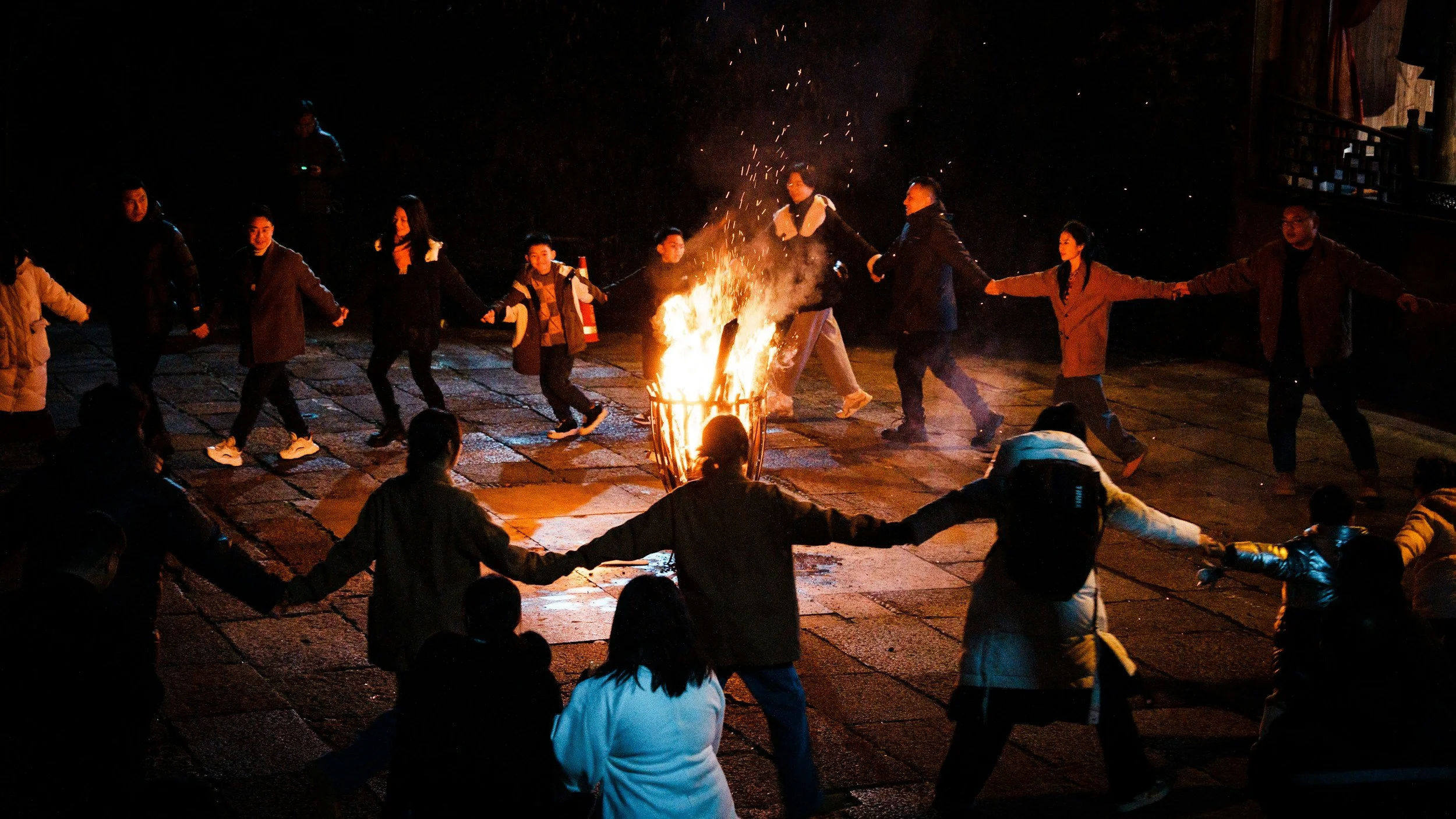
Bonfires became an enduring part of Samhain traditions, offering warmth, light, and ceremonial significance. In Irish folklore, the festival was also associated with supernatural encounters and the mysterious Otherworld.
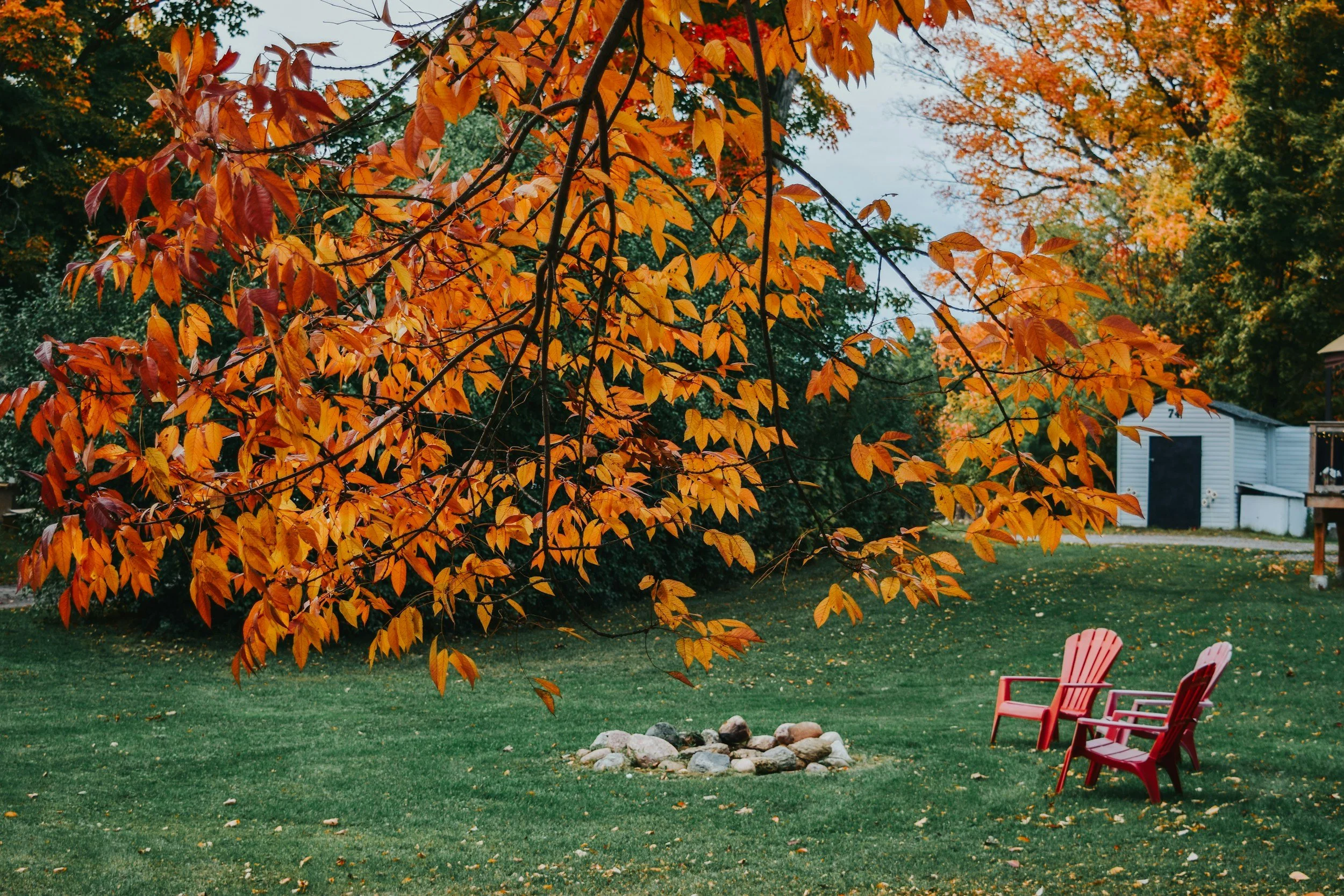
I can feel the energy of the season slowing as the days grow shorter and the evenings stretch into darkness. As cooler air finally makes its way into our Florida days and nights, I find myself craving cozy blankets, hearty homemade soups and stews made from the last of the harvest's bounty, and evenings gathered around a warm crackling bonfire sipping a glass of my favorite wine, Montepulciano. Cheers!
I love this time of year!
The Sacred Fires of Samhain
Fire became one of the festival's enduring symbols. Historical accounts and later traditions describe communal bonfires associated with Samhain.
Fire offered warmth and light, but it also carried ceremonial significance. In Irish folklore, Samhain was considered a time when the ordinary world and the supernatural Otherworld came unusually close. Stories told of mysterious beings, spirits, and encounters that blurred the boundaries between the familiar and the unknown.
For those who lived close to the rhythms of nature, the growing darkness was not simply an ending. It was part of an ever-turning cycle of life, death, and renewal. Perhaps that is where some of Halloween's enduring mystery begins.
Is Samhain a Date or a Season?
Although Samhain is traditionally observed from the evening of October 31 into November 1, some modern Pagan and spiritual traditions follow the movements of the Sun and Moon rather than a fixed calendar date.
Solar Samhain marks the Sun's arrival at approximately 15° Scorpio, near the midpoint between the autumn equinox and winter solstice, usually around November 6 or 7. Others recognize Lunar Samhain through the New Moon in Scorpio.
While the precise ways ancient Celtic communities determined the festival's timing remain uncertain, these different observances share a beautiful theme: honoring the changing seasons and the quiet transition into winter's darker half.
When the Veil Between Worlds Grows Thin
One of the most intriguing beliefs associated with Samhain is that the boundary between the world of the living and the supernatural world becomes unusually thin.
In Irish mythology, this mysterious realm is often called the Otherworld, a place associated with supernatural beings, extraordinary beauty, and a reality beyond ordinary human experience.
Samhain was believed to be a time when encounters between these worlds were especially possible.
The Spirits of Celtic Folklore
Among the supernatural beings of Irish tradition are the Aos Sí (roughly pronounced ees shee), often associated with ancient burial mounds, hills, and the unseen world.
In later Irish folklore, people sometimes left food or offerings to show respect for these mysterious beings and avoid attracting their displeasure.
Stories of wandering spirits, supernatural visitors, and unexpected encounters became part of the folklore surrounding this time of year.
The idea that deceased loved ones might return or remain close to the living also became associated with seasonal remembrance traditions.
Over time, these stories helped shape the mysterious atmosphere we recognize in Halloween today.
What Does the Thinning Veil Symbolize?
The familiar expression "the veil between worlds is thin" is especially popular in modern spiritual interpretations of Samhain.
Although its exact historical origins are uncertain, the imagery is powerful.
It invites us to consider the mysteries of life and death, the memories of those who came before us, and the connections that remain even after someone is gone.
Perhaps the veil is not something we need to see or cross. Perhaps it is simply a poetic reminder that the past is never entirely separate from the present.
The people we have loved, the stories we've inherited, and the experiences that have shaped us continue to influence the lives we live today.
All Hallows' Eve: Where Traditions Meet
As Christianity spread through Europe, new religious observances became part of the autumn calendar.
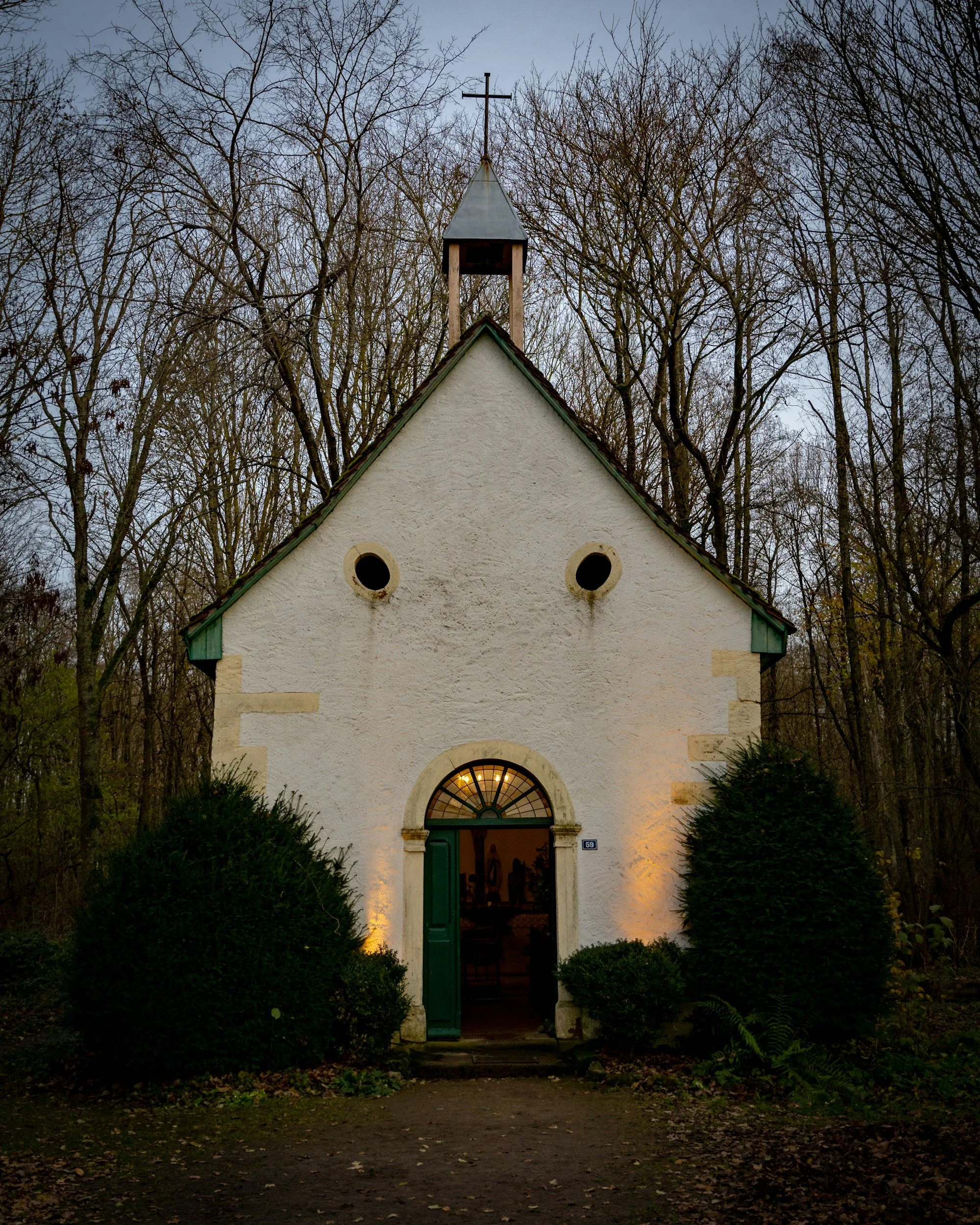
One of these was All Saints' Day, a Christian observance honoring saints and those regarded as holy. In the Western Christian tradition, it eventually became associated with November 1.
The evening before became known as All Hallows' Eve. The word hallow is an older English term for a holy person or saint, and over time, the name evolved into the familiar word Halloween.
November 2 also became associated with All Souls' Day, a day of prayer and remembrance for the faithful departed.
Over the centuries, religious observances, local folklore, and seasonal customs helped shape the many traditions that eventually became part of Halloween as we know it today.
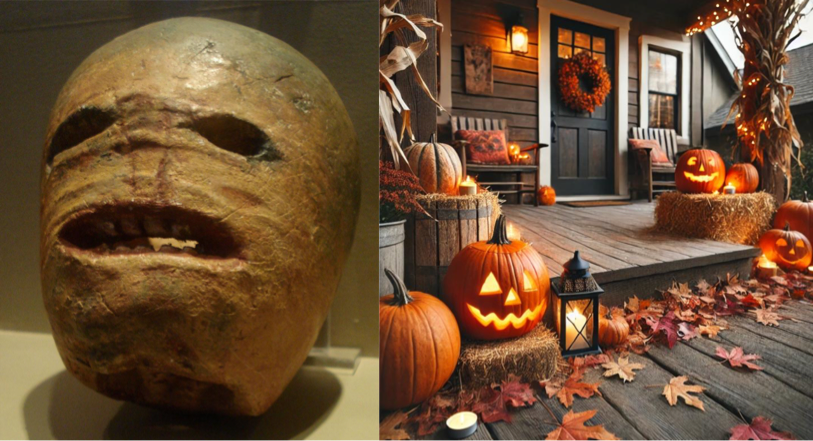
traditional turnip lantern & modern pumpkin lantern
From Turnip Lanterns to Trick-or-Treating
Some of Halloween's most familiar traditions have surprisingly curious histories. The glowing jack-o'-lanterns, elaborate costumes, and neighborhood trick-or-treating we enjoy today didn't appear all at once. They developed over centuries, shaped by folklore, religious customs, immigration, and changing communities.
The Legend of Stingy Jack
Long before pumpkins glowed on American porches, people in Ireland and parts of Britain carved frightening faces into turnips and other root vegetables.
One popular Irish folktale tells of a clever but troublesome man known as Stingy Jack, who tricked the Devil and, according to the legend, was denied entry into both heaven and hell.
Condemned to wander in darkness, Jack carried a glowing ember inside a hollowed-out turnip to light his way.
His wandering light became associated with the mysterious jack-o'-lantern.
When Irish immigrants brought their traditions to North America, pumpkins eventually became a popular alternative. They were plentiful, larger, and easier to carve than turnips and so, the glowing pumpkin became one of Halloween's most recognizable symbols.
Why Do We Dress in Costumes?
The tradition of disguising ourselves at Halloween also has a long and varied history.
In Ireland and Scotland, a custom known as guising involved dressing in costumes or disguises and visiting homes, sometimes performing songs, jokes, or other entertainments in exchange for food or treats.
Other customs, including seasonal masquerades and community celebrations, also contributed to the development of Halloween costumes.
Over time, disguises that once reflected local folklore and supernatural beliefs evolved into the witches, ghosts, storybook characters, and imaginative creations we see today.
From Souling to Trick-or-Treating
During the medieval period, a custom known as souling was practiced in parts of Britain and Ireland around All Souls' Day. People went from door to door requesting food or small cakes, often offering prayers for the dead in return.
Although souling and guising are frequently discussed as predecessors of trick-or-treating, modern trick-or-treating developed through a combination of older customs and more recent North American traditions centered on children, costumes, and candy.
Beneath the glowing pumpkins and colorful costumes, traces of older stories remain. Stories of wandering spirits, changing seasons, community gatherings, and the mysteries that have fascinated people for generations.
A Season for Remembering and Releasing
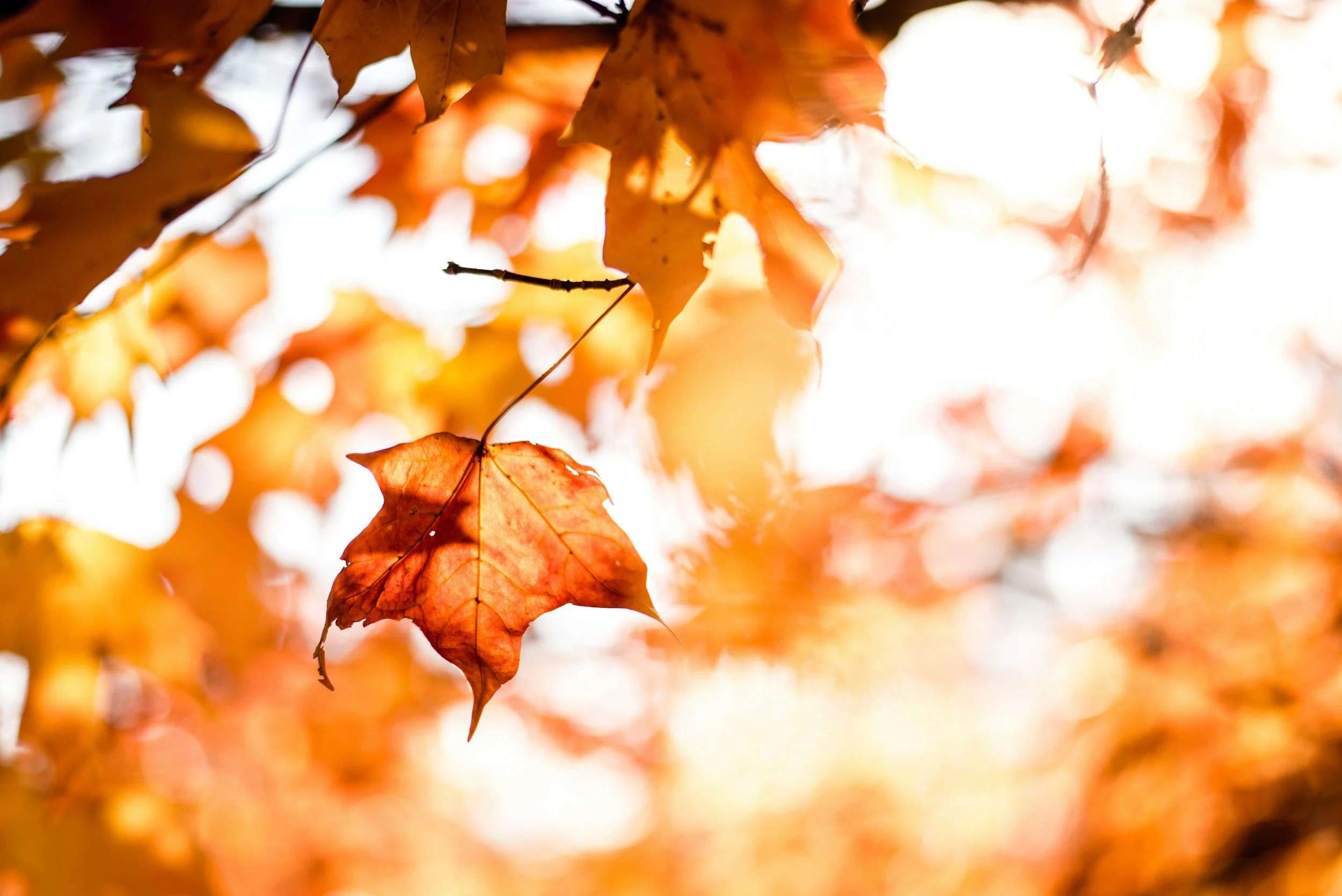
As autumn settles in and nature prepares for its winter rest, Halloween offers more than costumes, candy, and spooky stories. It invites us to consider the cycles of life, the memories we cherish, and the things we may be ready to leave behind.
Just as trees release their leaves, we too move through seasons of change, letting go of what no longer serves us while making room for what comes next.
A Mindful Reflection: What Will You Carry Forward?
As the season changes, consider taking a few quiet moments with your journal and a warm cup of tea.
Reflect on these questions:
Remember: What person, memory, or experience has shaped who you are today?
Release: Is there a worry, expectation, or old story that you are ready to loosen your hold on?
Carry Forward: What wisdom, love, or experience would you like to bring into the next chapter of your life?
There is no need to find perfect answers.
Simply allow yourself to notice what arises, without judgment or expectation.
As autumn gives way to winter, nature reminds us that letting go is part of life's rhythm. The changing seasons invite us to honor what has been, appreciate what remains, and make peace with what is coming to an end.
Perhaps the true magic of this season is not found in the supernatural, but in the quiet realization that endings and beginnings are often part of the same beautiful cycle.
Panda Pause
Nature reminds us that every season has its purpose. There is a time for growing, a time for gathering, and a time for letting go.
Perhaps the beauty of autumn lies not only in what fades, but in what remains: the memories we carry, the love we've known, and the wisdom gathered along the way.
Even as the seasons change, some things stay with us.
