
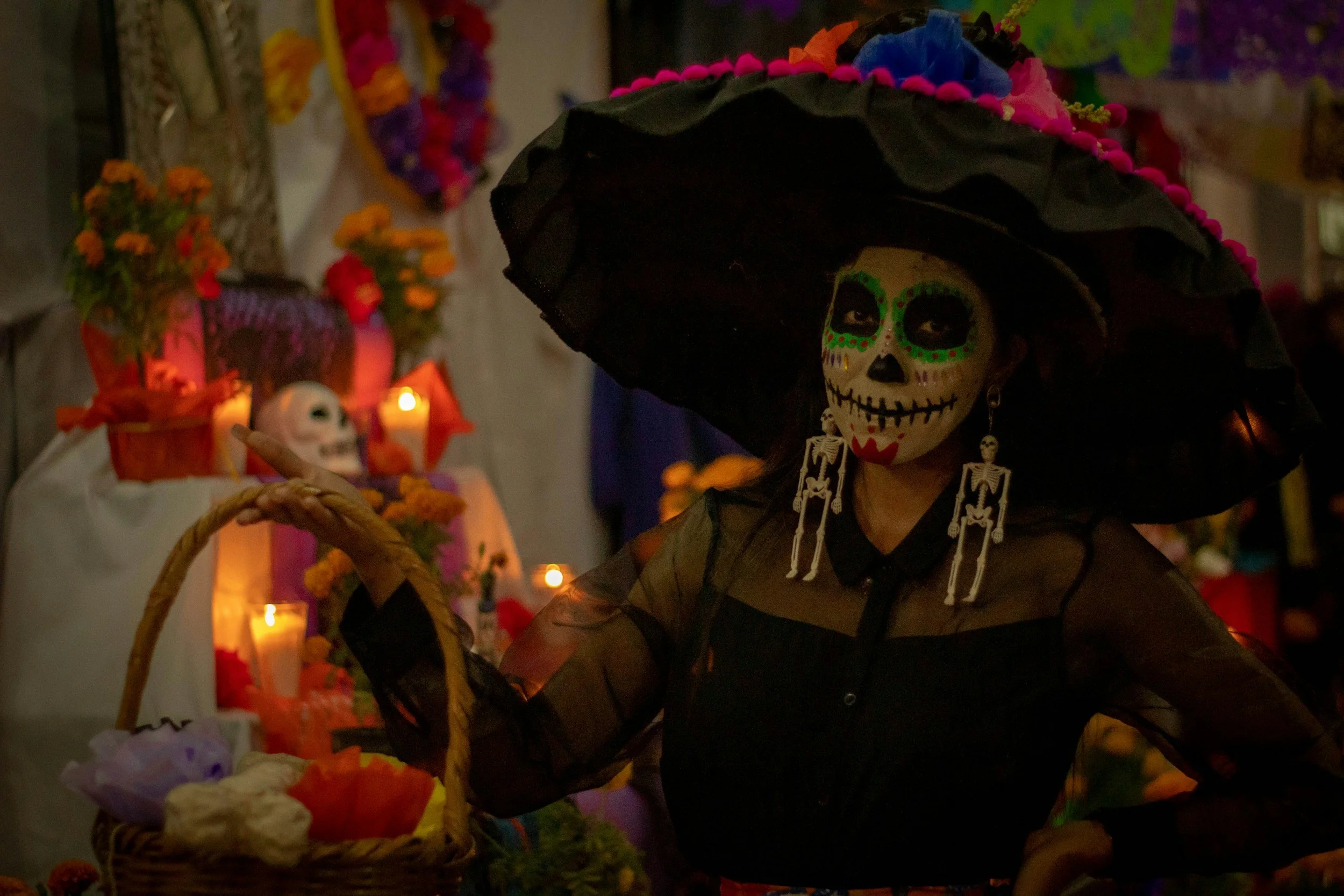
Each year, families across Mexico celebrate Día de los Muertos, or Day of the Dead, a tradition honoring loved ones who have passed away. Rooted in the belief that the spirits of the departed can return to visit their families, the celebration transforms remembrance into something vibrant and deeply personal.
Although it takes place around the same time as Halloween, Día de los Muertos has its own rich cultural history, shaped by Indigenous Mexican traditions and Catholic observances. At its heart is a beautiful idea: those we love remain part of our lives through the memories, stories, and traditions we continue to share.
Imagine a pathway of golden marigold petals, the soft glow of candlelight, and a table filled with photographs, favorite foods, and treasured memories. This is an ofrenda, a traditional offering or altar created to welcome and honor loved ones who have passed. Rather than a gathering centered on fear or sorrow, Día de los Muertos is a celebration of love, remembrance, and the lives that continue to touch our own.
Ancient Roots: Where Two Traditions Meet
Long before the arrival of the Spanish, Indigenous civilizations throughout Mexico had their own beliefs and ceremonies honoring the dead. For many of these communities, death was not simply an ending but part of a continuing relationship between the living, their ancestors, and the spiritual world.
When Spanish colonizers arrived in the sixteenth century, they brought Catholic traditions, including All Saints' Day on November 1 and All Souls' Day on November 2. Over time, Indigenous practices of honoring ancestors and remembering the dead became intertwined with these Christian observances, helping shape the celebration known today as Día de los Muertos.
What makes Día de los Muertos so meaningful is the idea that remembrance is more than looking back. It is a way of keeping loved ones present in the stories, gatherings, and traditions of everyday life.
This is something that touches my own heart deeply.
I lost my mother when I was just 24 years old and pregnant with my first daughter. For a long time, I searched for a way to feel connected to her that was rooted in love rather than the sadness of losing her.
It took me years to discover this beautiful tradition, but I am so grateful I did.
Every year, I create my own remembrance altar with photographs of my mother and others I've lost along my journey. I surround their pictures with crystals, herbs, candles, treasured gifts, and little things that remind me of who they were and what they meant to me.
For me, this quiet ritual is a way of keeping their memories alive, feeling connected to them on a deeper level, and holding them close in both my heart and my everyday life.
The Ofrenda: A Welcome for the Souls We Love
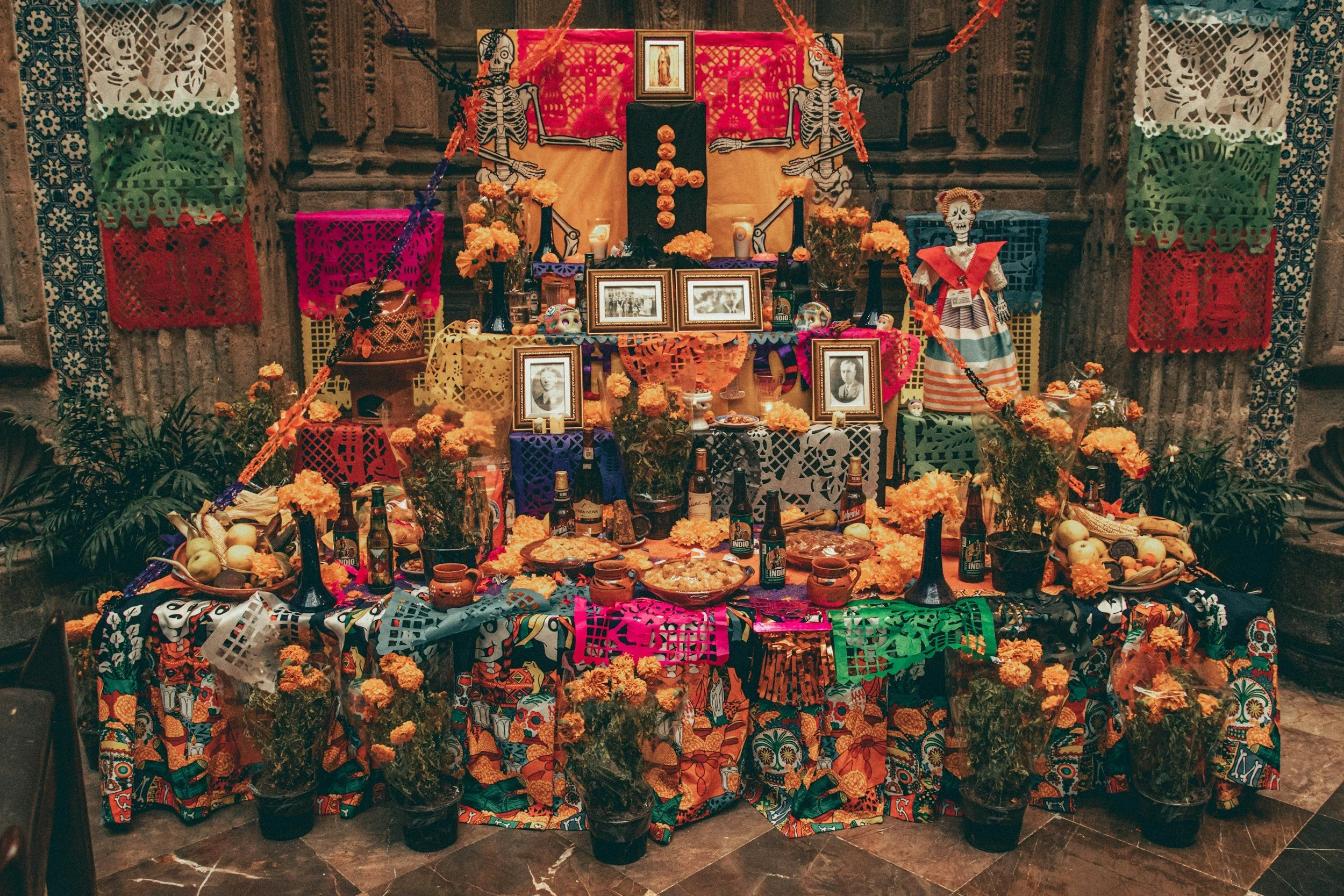
One of the most meaningful traditions of Día de los Muertos is the ofrenda, an altar lovingly prepared to welcome and honor deceased family members and friends. Often decorated with bright yellow-orange marigolds, glowing candles, photographs, and favorite foods, the ofrenda is more than a beautiful display. Each offering carries a special meaning, creating a space where memory, love, and tradition come together.
The Meaning Behind the Offerings
Marigolds (Cempasúchil): Their brilliant orange and golden petals are traditionally believed to help guide returning spirits with their color and fragrance.
Candles: Their gentle flames symbolize light and may serve as guides for the souls of loved ones.
Photographs: Pictures of those being remembered give the altar a deeply personal connection.
Food and Drink: Favorite meals, sweets, and beverages are placed as welcoming offerings for returning loved ones.
Water: Traditionally offered to refresh the spirits after their journey.
Papel Picado: Delicate, colorful paper banners bring movement and beauty to the altar and are often associated with the element of air.
Pan de Muerto: A special sweet bread traditionally prepared and shared during the celebration, often decorated with dough shaped to resemble bones.
Every ofrenda is unique, reflecting the people being honored and the family or community creating it.
Perhaps that is what makes this tradition so touching. Through familiar photographs, favorite foods, and cherished objects, remembrance becomes something we can see, feel, and share.
When the Living Remember the Dead
Día de los Muertos is traditionally celebrated on November 1st and 2nd. In many Mexican traditions, November 1 is associated with remembering children who have died, sometimes called Día de los Angelitos (Day of the Little Angels). November 2 is commonly dedicated to remembering deceased adults.
Families prepare ofrendas, visit cemeteries, decorate graves with marigolds and candles, and gather to share food, music, stories, and memories.
In some communities, cemetery gatherings continue into the evening, with families spending time beside the resting places of those they love.
These gatherings can be joyful, solemn, or a little of both. Laughter and tears may share the same space as families remember the personalities, favorite stories, and lasting influence of those who have passed.
Rather than treating death as something that must remain unspoken, Día de los Muertos creates a meaningful opportunity to celebrate the lives that came before us and the connections that continue through remembrance.
Skulls, Catrinas & the Beauty of Remembrance
One of the most recognizable symbols of Día de los Muertos is the beautifully decorated skull, often adorned with colorful flowers, intricate patterns, and cheerful expressions.
Although skulls may seem frightening in other traditions, here they can represent something quite different: an acknowledgment that death is a natural part of life, approached with humor, affection, and remembrance.
La Catrina: The Elegant Lady of Death
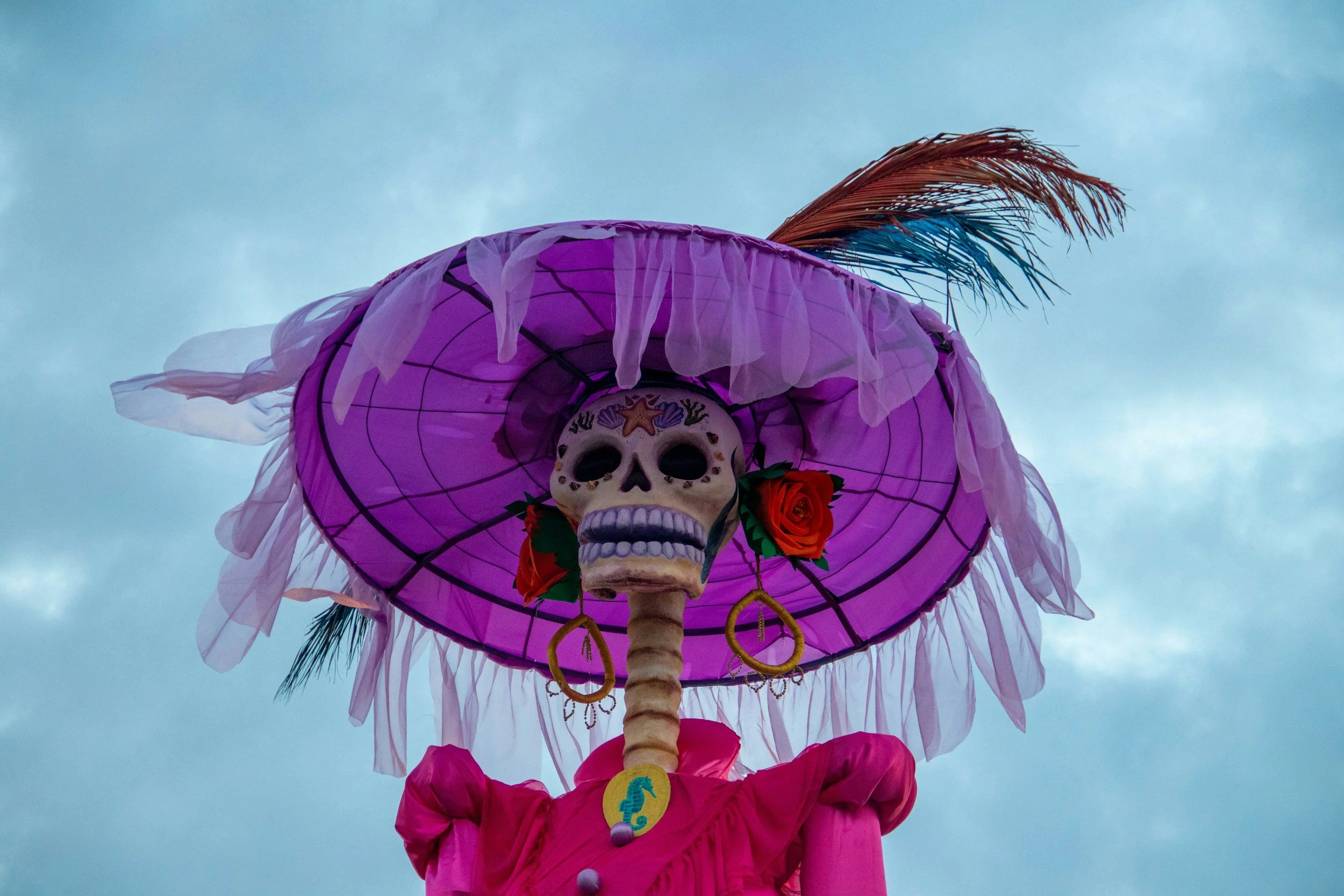
With her elaborate hat, elegant clothing, and unmistakable skeletal face, La Catrina has become an iconic figure associated with Día de los Muertos.
Her origins, however, are surprisingly political.
Mexican artist José Guadalupe Posada created a satirical skeletal figure known as La Calavera Garbancera in the early twentieth century, mocking social pretensions and the desire to imitate European fashions.
Artist Diego Rivera later depicted her in an elegant dress in his mural Dream of a Sunday Afternoon in Alameda Central Park, helping establish the figure we now recognize as La Catrina.
Today, she appears in artwork, costumes, parades, and decorations, reminding us that death makes no distinction between wealth, status, or social standing.
Sugar Skulls: A Sweet Reminder of Life
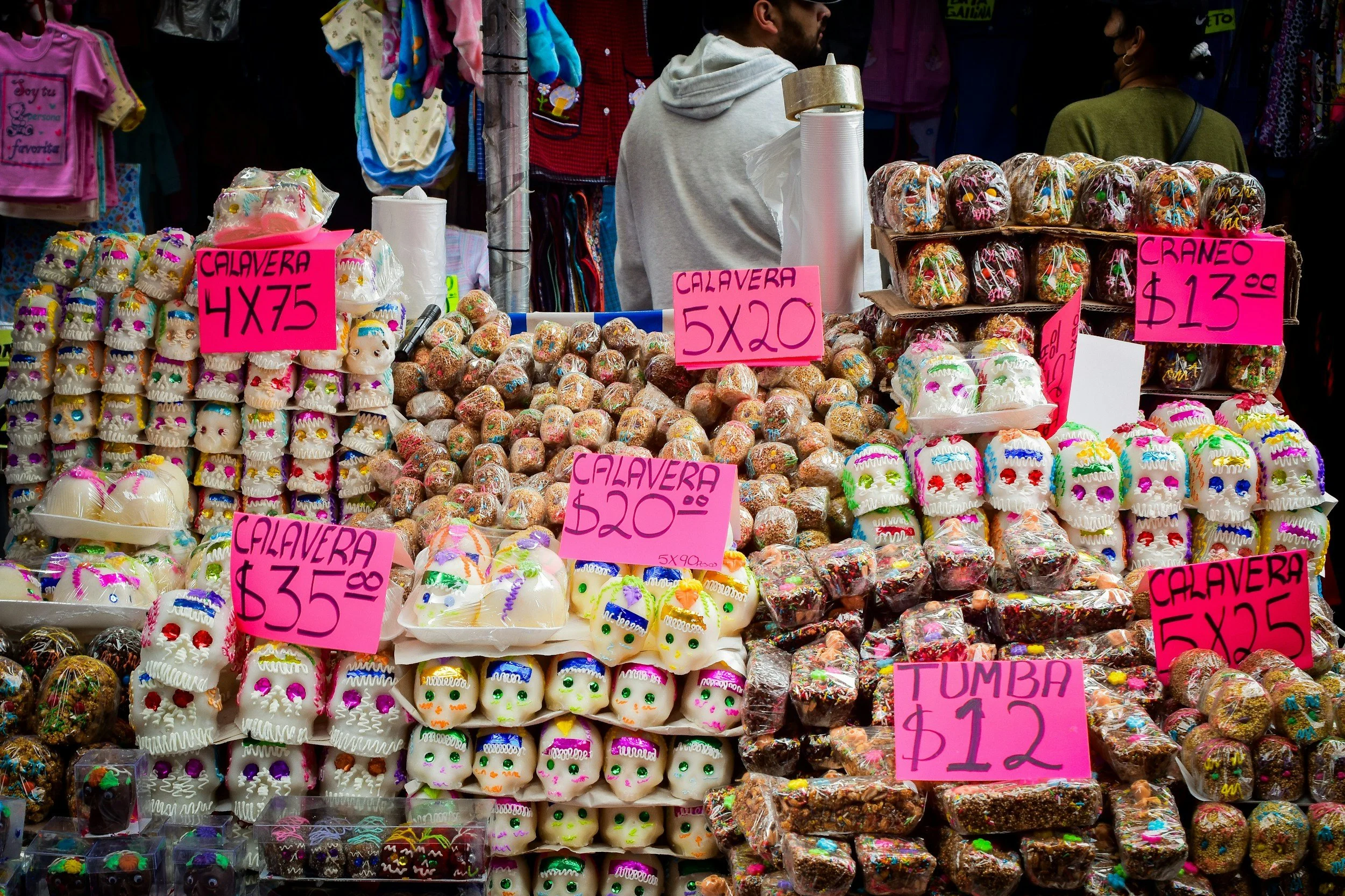
Colorful calaveras de azúcar, or sugar skulls, are another familiar part of the celebration.
Often decorated with bright icing, foil, and sometimes the names of loved ones, these skulls may be placed on ofrendas as offerings or given as festive gifts.
Rather than symbols of fear, they reflect the playful and affectionate ways people can acknowledge mortality while celebrating life.
Together, La Catrina and the colorful calaveras remind us that remembering those who have died does not always have to be somber. Sometimes remembrance can be filled with color, laughter, creativity, and love.
A Mindful Reflection: Love Beyond Loss
One of the most beautiful lessons of Día de los Muertos is that remembering someone doesn't have to be centered entirely on the sadness of losing them. Grief and gratitude can exist together. We can miss someone deeply while still finding joy in the memories, traditions, and little pieces of themselves they left behind. Sometimes it's a familiar recipe, a favorite song, a treasured photograph, or a story that still makes us laugh. These small reminders become threads connecting our past to our present.
Think of someone who has touched your life, whether they are still with you or have passed on.
Consider these questions:
Remember: What is one memory of this person that always brings warmth to your heart?
Celebrate: What unique quality, tradition, or little habit made this person special to you?
Carry Forward: Is there something they taught you, shared with you, or inspired in you that continues to be part of your life today?
You might choose to write your thoughts in a journal, revisit a favorite photograph, prepare a meaningful recipe, or simply spend a quiet moment remembering.
Sometimes the most meaningful rituals are the simplest ones, created with love and intention.
Panda Pause
The people we love leave little pieces of themselves in who we become. What memories, lessons, or traditions from someone you've lost continue to live through you today?
