
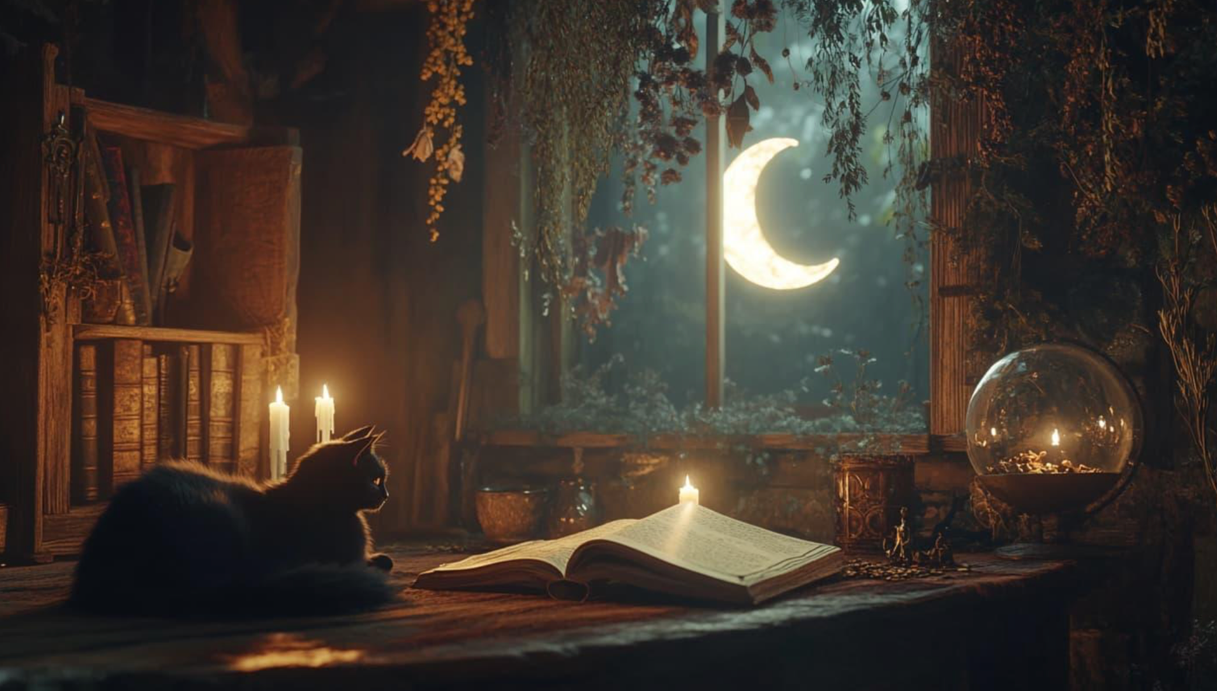
A Day Wrapped in Mystery
Friday, November 13, 2026.
For some, the date is enough to inspire a little uneasiness. Perhaps you avoid making important decisions, postpone travel or beginning something new, or think twice before walking beneath a ladder.
For others, Friday the 13th is simply another day, perhaps one with a little extra mystery.
But have you ever wondered why we consider this particular combination of a weekday and a number unlucky? Who decided that thirteen was something to fear? And could there be another way to understand its symbolism?
The story is more complicated, and far more interesting, than the superstition suggests. Woven through its history are layers of mythology, religious traditions, and symbolism. And within modern spiritual practices, this supposedly unlucky day has taken on an entirely different meaning, one connected to feminine energy, intuition, creativity, and transformation.
Perhaps the most interesting question isn't whether Friday the 13th brings bad luck, but why we've allowed a date on the calendar to hold so much power over us.
How Did Friday the 13th Become Unlucky?

The superstition surrounding Friday the 13th appears to have developed from two older beliefs: that Fridays were unlucky and that the number thirteen brought misfortune.
In Christian tradition, Friday became associated with the crucifixion of Jesus, while thirteen was connected to the Last Supper, where Jesus gathered with his twelve apostles before his death.
Another popular explanation involves the Knights Templar, a medieval religious and military order. On Friday, October 13, 1307, King Philip IV of France ordered the arrest of numerous Templars. Although the arrests really happened, historians have found no convincing evidence that they originated the Friday the 13th superstition.
In fact, some of the earliest clear written references to the unlucky combination appear in French literature during the 1830s, centuries after the Templar arrests.
Rather than one ancient curse or forgotten event, Friday the 13th appears to have developed through centuries of storytelling, religious associations, and cultural beliefs.
But not every culture shares this fear. In Spain and Greece, Tuesday the 13th has traditionally been considered unlucky, while in Italy, Friday the 17th carries a similar reputation. What we consider unlucky often depends on the stories we've inherited.
The Number Thirteen: Beyond Bad Luck

Why thirteen?
The number thirteen has long attracted curiosity, partly because it follows twelve, a number deeply embedded in the ways we organize our world.
Twelve months make a year. Twelve signs form the traditional zodiac. Twelve hours mark each half of the day on a familiar clock. Even in everyday life, we find ourselves counting by twelves: a dozen bagels, a dozen donuts, or a dozen roses.
Twelve has often represented completeness and order.
But numbers do not carry the same meanings across every culture or spiritual tradition. What one tradition considers unlucky, another may interpret quite differently.
In modern numerology, thirteen is often associated with transformation, rebuilding, and personal growth. Its digits, one and three, add together to four, a number commonly interpreted as representing stability and strong foundations.
There is something rather beautiful about that symbolism. What initially appears to disrupt the familiar order of twelve can instead represent the opportunity to create something new, something built on a stronger foundation. And thirteen has another intriguing connection, one found in the rhythms of the natural world.
The moon.
A lunar cycle, from one new moon to the next, lasts approximately 29.5 days. A solar year contains about 12.37 of these cycles, meaning that some calendar years include thirteen new moons.
Contemporary spiritual practices sometimes connect this lunar symbolism with feminine rhythms, creativity, and renewal. Although there is no established historical evidence that thirteen was universally revered as a sacred feminine number in ancient cultures, its modern symbolism offers a meaningful way to reflect on the cycles of our own lives.
Like the moon, we experience periods of growth, fullness, release, and renewal. We are not meant to remain the same through every season.
Perhaps thirteen doesn't have to represent misfortune at all. Perhaps it can remind us that change is a natural part of life, and that stepping beyond what is familiar is sometimes how we grow.
Friday: A Day Connected to Goddesses and Love
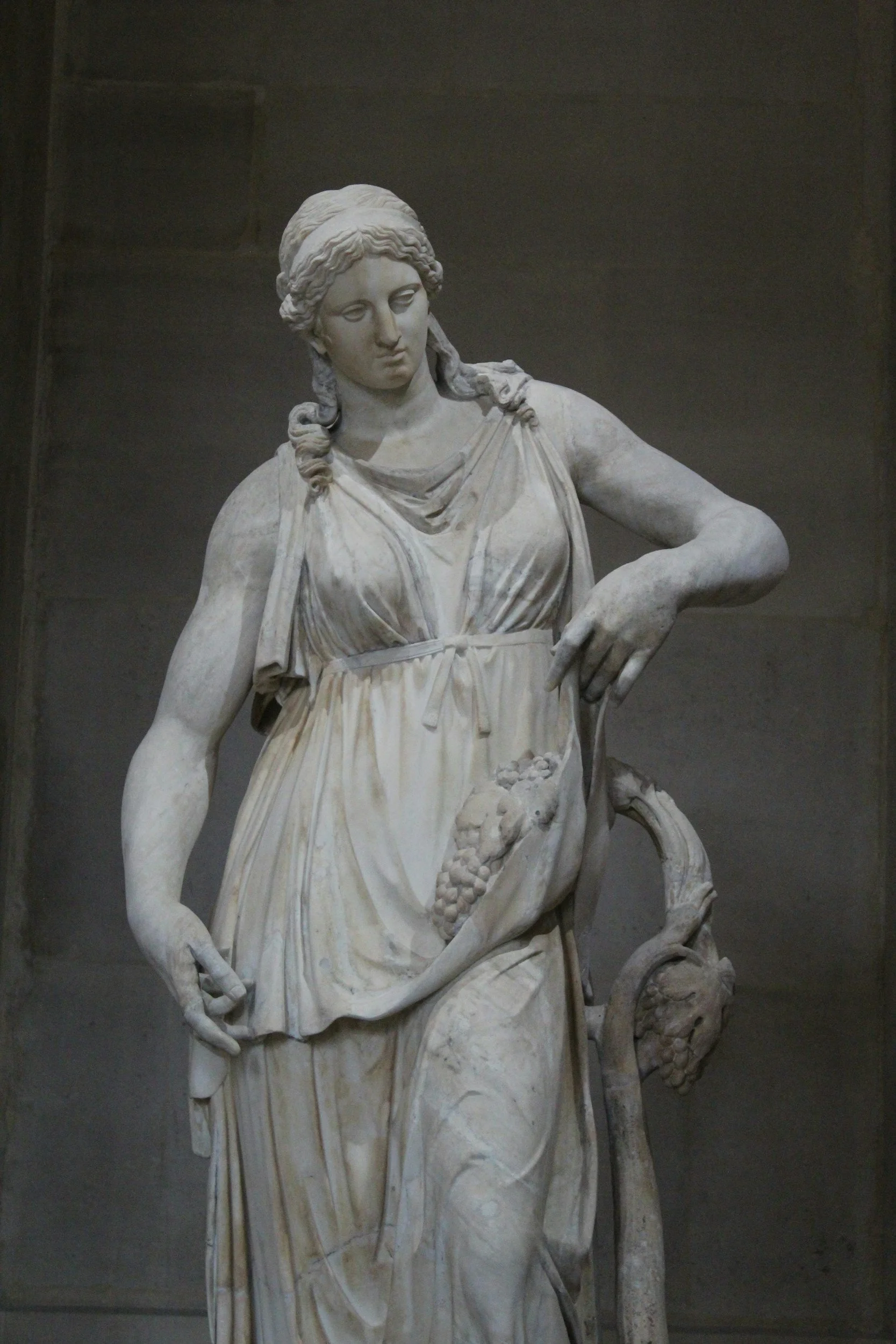
Venus
The Goddess of Love
Perhaps the most intriguing part of Friday the 13th's mystical symbolism is hidden within the name Friday itself. The English word Friday comes from an Old English name associated with Frigg, a goddess in Germanic mythology connected with marriage, motherhood, and love. In Roman tradition, the corresponding day was dedicated to Venus, goddess of love, beauty, desire, and fertility. Freya, another prominent goddess in Norse mythology, was associated with love, beauty, and magic. Although Frigg and Freya are distinct figures in surviving mythology, their associations have sometimes overlapped in later interpretations. These connections have inspired contemporary spiritual practitioners to view Friday as a day for celebrating love, beauty, creativity, and feminine wisdom.
When Friday and the number thirteen meet, some modern traditions interpret the combination as a symbolic invitation to reconnect with the sacred feminine. Not because the date possesses a scientifically demonstrable supernatural power, but because the symbolism offers an opportunity to honor qualities we sometimes overlook. Compassion. Intuition. Creativity. Receptivity. Inner strength. And perhaps most importantly, the freedom to trust ourselves.
The Sacred Feminine and the Wisdom of Intuition

The sacred feminine is not necessarily about gender. In contemporary spirituality, it often represents qualities associated with nurturing, emotional awareness, creativity, intuition, and connection with the natural world. These qualities can exist within anyone.
Yet we live in a world that frequently celebrates productivity, certainty, and logic. We are encouraged to make plans, find answers, and keep moving forward.
Intuition asks something different of us.
It invites us to become quiet enough to notice what we're feeling, recognize patterns in our experiences, and listen to the subtle wisdom we've gathered throughout our lives. Intuition isn't infallible, nor does it replace thoughtful decision-making. But our feelings and experiences can offer valuable information that deserves consideration alongside reason.
Perhaps this is where Friday the 13th becomes particularly meaningful. Instead of fearing the unknown, we can become curious about it. Instead of treating uncertainty as a warning, we can recognize that not every question requires an immediate answer. And instead of allowing old superstitions to shape our expectations, we can choose what meaning this day holds for us.
A Reflection: Reclaiming the Day

Instead of approaching Friday the 13th with apprehension, what if we welcomed it with curiosity?
We might use the day as a gentle reminder to examine the beliefs we carry, particularly those we inherited without ever questioning them.
Consider a belief about yourself, your abilities, or your future that you have accepted for years.
Is it something you know to be true, or simply a story that has become familiar?
Sometimes, questioning an old belief creates space to listen more closely to ourselves, to our intuition, our curiosity, and the quiet wisdom we've gathered through experience.
You don't need an elaborate ceremony to create a meaningful moment on Friday the 13th.
Perhaps you light a candle, settle into a comfortable space, and spend a few minutes away from the noise of everyday life. If you enjoy working with symbolic objects, you might include a rose for love, a moonstone for intuition, or something handmade that reminds you of your own creativity.
These objects don't need to possess magical properties to hold personal meaning.
Take a few slow breaths and consider:
Have you ever known something felt right without being able to explain why?
When was the last time you followed your curiosity simply because something interested you?
Have you ever avoided something because you were afraid of what might happen?
Is there something in your life right now that your intuition is encouraging you to explore?
Where in your life have you been looking outside yourself for an answer you might already understand?
Allow yourself to explore whichever questions resonate with you, without rushing toward a conclusion.
You might write a few thoughts in your journal or simply sit quietly with whatever comes to mind.
The intention isn't to predict the future or invite good fortune. It's to create a moment of connection with yourself.
From Fear to Wonder

Friday the 13th has spent generations wrapped in stories of misfortune, but stories can evolve.
We can appreciate its folklore without fearing it. We can explore its mythology without confusing symbolism with historical fact. And we can find beauty in modern spiritual interpretations without needing everyone to share our beliefs.
Perhaps Friday the 13th is neither lucky nor unlucky. Perhaps it's simply a day that reminds us how much power we give to the stories we tell ourselves.
And maybe, just maybe, we can choose a different story.
One of curiosity instead of fear, intuition instead of doubt, and possibility instead of superstition.
After all, there's something rather wonderful about transforming a day once associated with misfortune into an opportunity to celebrate our own inner wisdom.
And if a black cat happens to cross your path, perhaps you can simply admire the cat.
Panda Pause
What is one belief you grew up with that you see differently today?
